

Mercury—known by the symbol Hg and often called quick silver or silver liquid metal—is one of the most mysterious substances on Earth. For millennia, humans have been fascinated by its shimmering surface, surprising density, and seemingly magical ability to remain liquid at room temperature. But beyond its beauty and scientific intrigue, mercury carries a complex identity shaped by its physical properties, chemical behavior, industrial uses, and environmental impact.
In this comprehensive guide, we explore 40+ detailed attributes of liquid mercury, organized into clear categories—physical, chemical, practical, historical, environmental, and toxicological. Whether you are a student, teacher, researcher, or curious mind, this article provides a complete reference to understand what makes mercury so extraordinary—and why it must be handled with great respect.
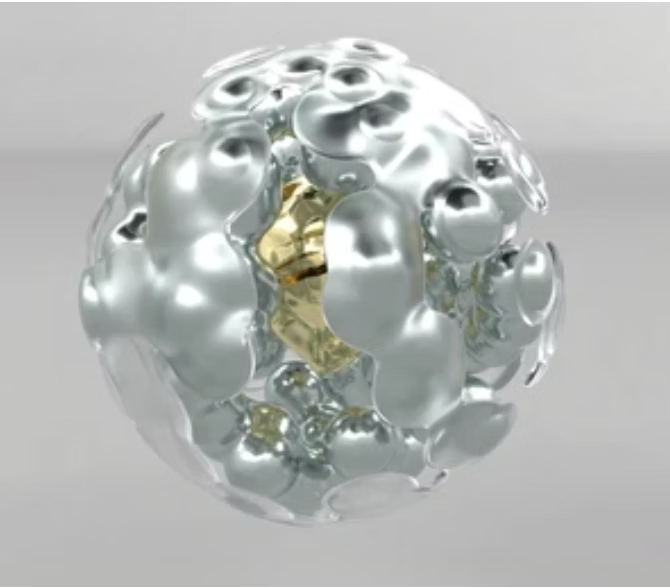
1. Introduction: What Is Silver Liquid Mercury?
Mercury is a naturally occurring metallic element found in Earth’s crust. Unlike nearly all other metals, mercury is liquid at room temperature, giving it a distinctive, flowing, silver appearance. Historically used in thermometers, barometers, lamps, and gold extraction, its applications have changed dramatically due to rising awareness of mercury’s dangerous toxicity to humans and ecosystems.
Understanding mercury’s properties is essential for many fields—chemistry, physics, metallurgy, mining, environmental science, and industrial safety—making this guide both educational and practical.
2. Physical Attributes of Liquid Mercury
Mercury’s physical characteristics are what first catch the eye. These features explain why scientists have used it for measurement instruments and why many ancient civilizations regarded it as mystical.
1. Metallic Silver Appearance
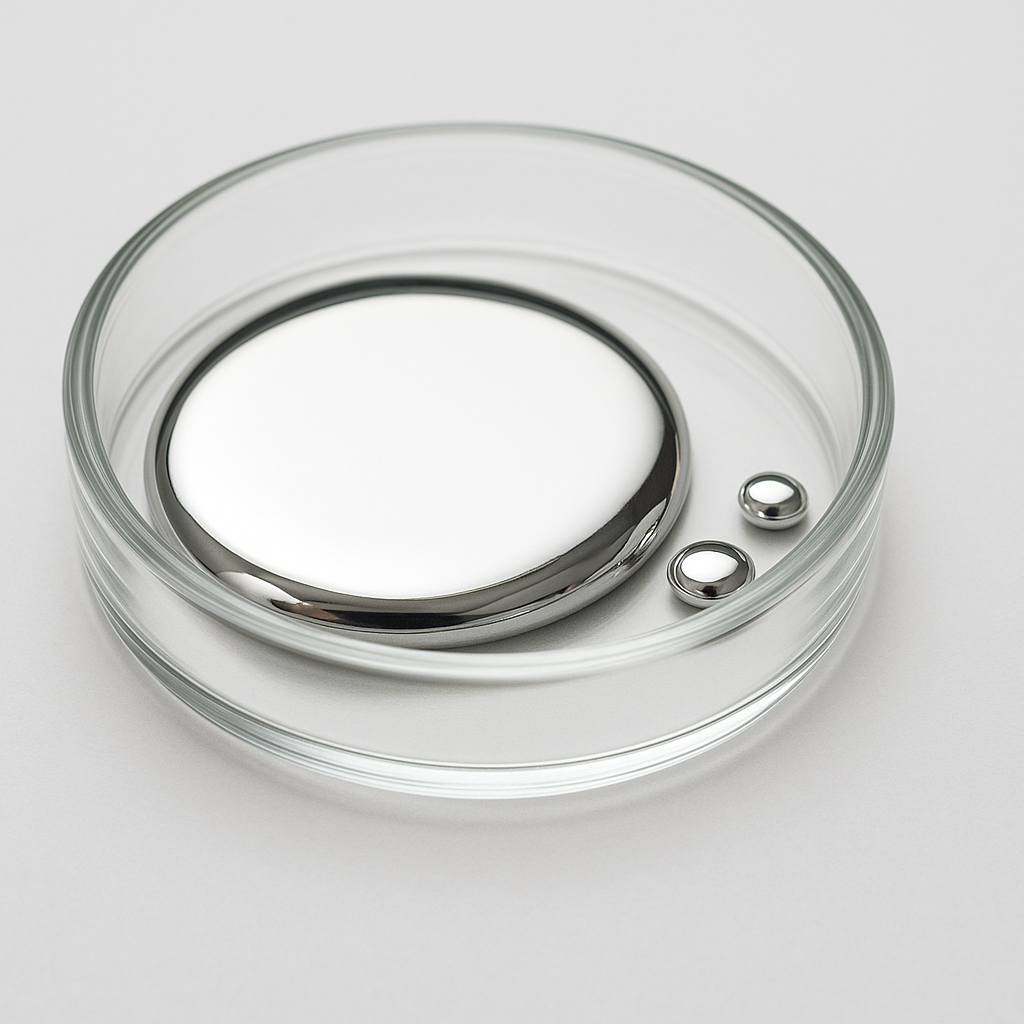
Mercury’s bright, silvery-white sheen is highly reflective. The metal’s smooth, mirror-like surface is one of its most recognizable traits, which is why it was historically used in early mirror manufacturing.
2. Liquid at Room Temperature
Mercury is one of the only metals that remains liquid at standard room temperature (20–25°C).
- Melting point: –38.83°C
- Boiling point: 356.73°C
This wide liquid range is why mercury served as the working fluid in thermometers for centuries.
3. High Density
Mercury is extremely dense—13.5 times denser than water.
A small container of mercury feels surprisingly heavy, a trait that makes the metal vital in pressure-measuring devices like barometers.
4. High Surface Tension
One of mercury’s most visually striking properties is how it forms perfect, round beads when spilled.
This is due to exceptionally high surface tension, causing the liquid to resist spreading.
5. Non-Wetting Behavior
Mercury does not stick to most surfaces, especially glass. Instead, droplets roll freely, which historically made mercury ideal for scientific instruments.
6. Low Heat Conductivity
Unlike most metals, mercury conducts heat poorly. This unusual trait limits its usefulness in heat-transfer applications.
7. Good Electrical Conductivity
Despite its poor heat conduction, mercury is a good electrical conductor. For this reason, it has been used in:
- switches
- relays
- tilt sensors
- early electrical devices
8. Low Viscosity
Mercury flows easily and smoothly, though it is thicker than water. Its low viscosity contributes to its characteristic fluid motion.
9. Diamagnetic Behavior
Mercury is weakly repelled by magnetic fields. Though not strongly magnetic, its subtle diamagnetism makes it useful in specific scientific experiments.
10. High Reflectivity
Mercury reflects approximately 75% of visible light, contributing to its brilliance and usefulness in early optics.
11. Opaque
As a metal, mercury does not transmit light; it is fully opaque regardless of layer thickness.
12. High Coefficient of Expansion
This property made mercury so valuable in thermometers. The metal expands uniformly with temperature changes, allowing precise temperature measurement.
13. High Atomic Mass
Mercury’s atomic weight is 200.59 u, one of the heaviest stable elements.
3. Chemical Attributes of Liquid Mercury
While its physical properties are captivating, mercury’s chemical behavior is equally important.
14. Low Reactivity at Room Temperature
Mercury does not easily react with oxygen or water in normal conditions. It remains bright and shiny for long periods without corroding.
15. Reaction with Strong Oxidizers
Although generally stable, mercury reacts with powerful oxidizers such as:
- concentrated nitric acid
- hot, concentrated sulfuric acid
These reactions form mercury nitrate or mercury sulfate.
16. Oxidation States: +1 and +2
Mercury can form compounds in two main oxidation states:
- Mercurous (Hg₂²⁺)
- Mercuric (Hg²⁺)
Mercuric compounds tend to be more stable.
17. Formation of Salts
Mercury forms various salts including:
- mercury(II) chloride
- mercury(I) chloride
- mercury(II) oxide
- mercury sulfide (cinnabar)
18. Formation of Amalgams
One of mercury’s most unique traits is its ability to form amalgams, or alloys, with many metals:
- gold
- silver
- tin
- copper
This property historically shaped industries such as dentistry and gold mining.
19. Reaction with Sulfur
Mercury readily combines with sulfur to form mercury sulfide—a stable, bright red or black compound.
20. Stability Under Normal Conditions
Mercury does not spontaneously decompose or react with mild environmental factors, which contributes to its longevity in natural deposits.
4. Environmental and Toxicological Attributes
As much as mercury fascinates scientists, it is also known for its profound toxicity. Understanding these traits is essential for safe handling and environmental protection.
21. Toxic to the Nervous System
Mercury—especially its vapor and methylmercury form—can severely damage the brain and nerves. Exposure may cause:
- tremors
- memory problems
- cognitive impairment
- mood disturbances
22. Toxic via Inhalation
Mercury vapor is colorless and odorless, making it especially dangerous.
Even at low concentrations, vapor inhalation can cause long-term damage.
23. Bioaccumulation in Ecosystems
In aquatic environments, mercury can convert into methylmercury, a highly bioaccumulative toxin. It builds up in:
- fish
- seabirds
- marine mammals
- humans (via seafood consumption)
24. Environmental Persistence
Mercury does not break down easily. It circulates through air, water, and soil for decades or centuries.
25. Global Environmental Pollutant
Because it travels long distances in the atmosphere, mercury contamination is a worldwide concern. International treaties, such as the Minamata Convention, work to reduce emissions.
26. Hazardous Waste Classification
Mercury must be disposed of as hazardous waste. It cannot be thrown away like ordinary trash.
27. Sensitive to Temperature and Pressure Changes
Environmental conditions can increase the amount of mercury vapor released from spills, making cleanup more urgent.
5. Historical and Practical Attributes
Mercury’s story spans medicine, mining, alchemy, science, and industry.
28. Ancient Alchemical Symbolism
Mercury represented fluidity, transformation, and immortality in ancient alchemy. It was associated with:
- the planet Mercury
- the Roman deity Mercury
- the concept of the “prima materia”
29. Early Scientific Instrument Use
Because mercury expands uniformly with heat, it became the standard fluid in:
- thermometers
- barometers
- vacuum pumps
- atmospheric pressure measurement tools
30. Use in Gold and Silver Extraction

Mercury forms amalgams with gold and silver, making it useful in mining. Unfortunately, this practice caused severe environmental contamination.
31. Electrical Applications
Because of its conductivity and liquid state, mercury was used in:
- tilt switches
- mercury arc rectifiers
- relays
- thermostats
Modern devices have largely replaced mercury due to safety concerns.
32. Use in Fluorescent Lights
Mercury vapor emits ultraviolet light when electrified. This UV light excites a phosphor coating, producing visible light.
33. Historical Medical Origins
Mercury compounds were once used as:
- antiseptics
- diuretics
- laxatives
- ointments for skin diseases
These uses were discontinued due to toxicity.
34. Symbol and Name Origin
The symbol Hg derives from the Greek hydrargyrum, meaning “water-silver.”
35. Use in Early Mirrors
Before modern aluminum coatings, mirrors were backed with a tin-mercury amalgam to create reflective surfaces.
36. Cultural and Ritual Use
Mercury was revered in ancient cultures including the Aztec, Chinese, and medieval European alchemy traditions.
6. Additional Unique Attributes
Beyond the main categories, mercury displays many finer, scientifically relevant traits.
37. High X-Ray Absorption
Its extreme density allows mercury to block and absorb X-rays effectively.
38. Thermoelectric Effects
Though not widely used for this purpose, mercury can participate in thermoelectric reactions.
39. Unusual Electron Configuration
Mercury’s stable electronic configuration contributes to its low reactivity and liquid state.
40. Low Vapor Pressure but Toxic Vapor
Even though its vapor pressure is low at room temperature, any amount of vapor is hazardous.
41. Nonflammable
Mercury does not catch fire, adding to its stability.
42. Naturally Occurring Ore: Cinnabar
Mercury is most often found as mercury sulfide (HgS) in bright red cinnabar rock.
7. Safe Handling and Precautions
If mercury must be handled, safety is paramount:
Never touch mercury with bare skin
Droplets can lodge in cracks, jewelry, and fabric.
Avoid breathing vapors
Use proper ventilation and protective equipment.
Never vacuum a mercury spill
Vacuuming spreads toxic vapor.
Use mercury spill kits
Special powders and suction tools are needed.
Follow hazardous waste disposal guidelines
8. Future of Mercury Use
Due to its toxicity, global usage of mercury has sharply declined. Industries now rely on safer alternatives:
- digital thermometers
- LED and CFL-free lighting
- electronic sensors
- modern mining technologies
Still, mercury remains important in scientific research and certain niche applications.
9. Conclusion
Mercury is a metal like no other—beautiful, dense, liquid, and scientifically extraordinary. Its 40+ attributes reveal why it has been treasured, studied, feared, and regulated for centuries. From its shimmering silver appearance to its dangerous vapor, mercury requires both admiration and caution.
Understanding its physical, chemical, historical, and environmental aspects helps us appreciate not only the science behind this remarkable element but also the responsibility we bear in handling and managing it safely.
10. Frequently Asked Questions
1. Why is mercury liquid at room temperature?
Because of its unique electron structure, mercury atoms bond weakly, allowing it to remain liquid under normal conditions.
2. Is mercury magnetic?
Mercury is diamagnetic—it is weakly repelled by magnetic fields.
3. Why is mercury dangerous?
Its vapor and certain compounds can cause severe neurological damage.
4. Is mercury still used in thermometers?
Rarely. Digital and alcohol thermometers have replaced mercury for safety reasons.
5. Can you touch mercury?
No. Mercury can be absorbed through the skin and its vapor is harmful.